



I’m going to lapse into a little bit of snooty prejudice about sports fans. When I think of a midwestern, beer-drinking, Sunday-night-football-watching dude (like my father-in-law),1 I don’t think of bookish scholarship. No offense.
So when I stumbled across The Blood and Guts: How Tight Ends Save Football at my local library—and it wasn’t about a whole team, or play strategy, or even a great offense or defense, but instead about one, just one position in the game—I was taken aback.
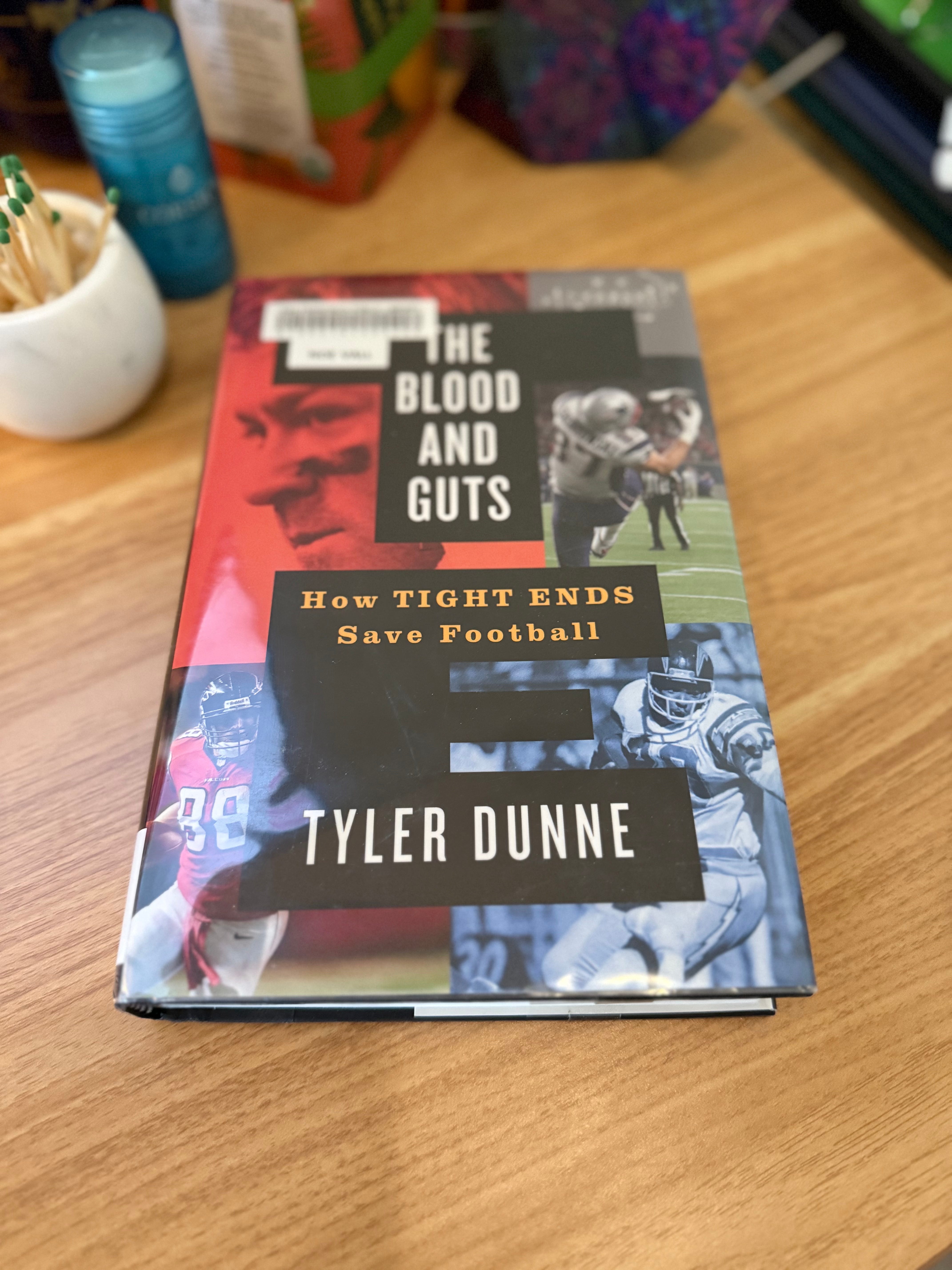
I couldn’t help but think: if a whole book about tight ends can make it into the world, why not my dystopian sci-fi novel?
It struck me then that there are millions of examples in the world of makers starting unusual creative projects and actually finishing them, even though they’re kinda niche. The Blood and Guts exists in the world, despite people like me who underestimate the interest and value of such a book. And that is really inspiring.
Tyler Dunne, the author, became a bit of a hero to me, in my head. He’s a sort of an avatar for the kind of person who just wakes up and does their work—the rest of the world can shove it.
I kept wishing I could ask the guy how he actually did it—write the damn book. So I did. I asked him.
“I still get a little PTSD when I think about it,” Tyler told me, laughing. He’s a father of three living in Western New York with his wife and kids. Writing The Blood and Guts was something he did on top of his regular work as a sports journalist.
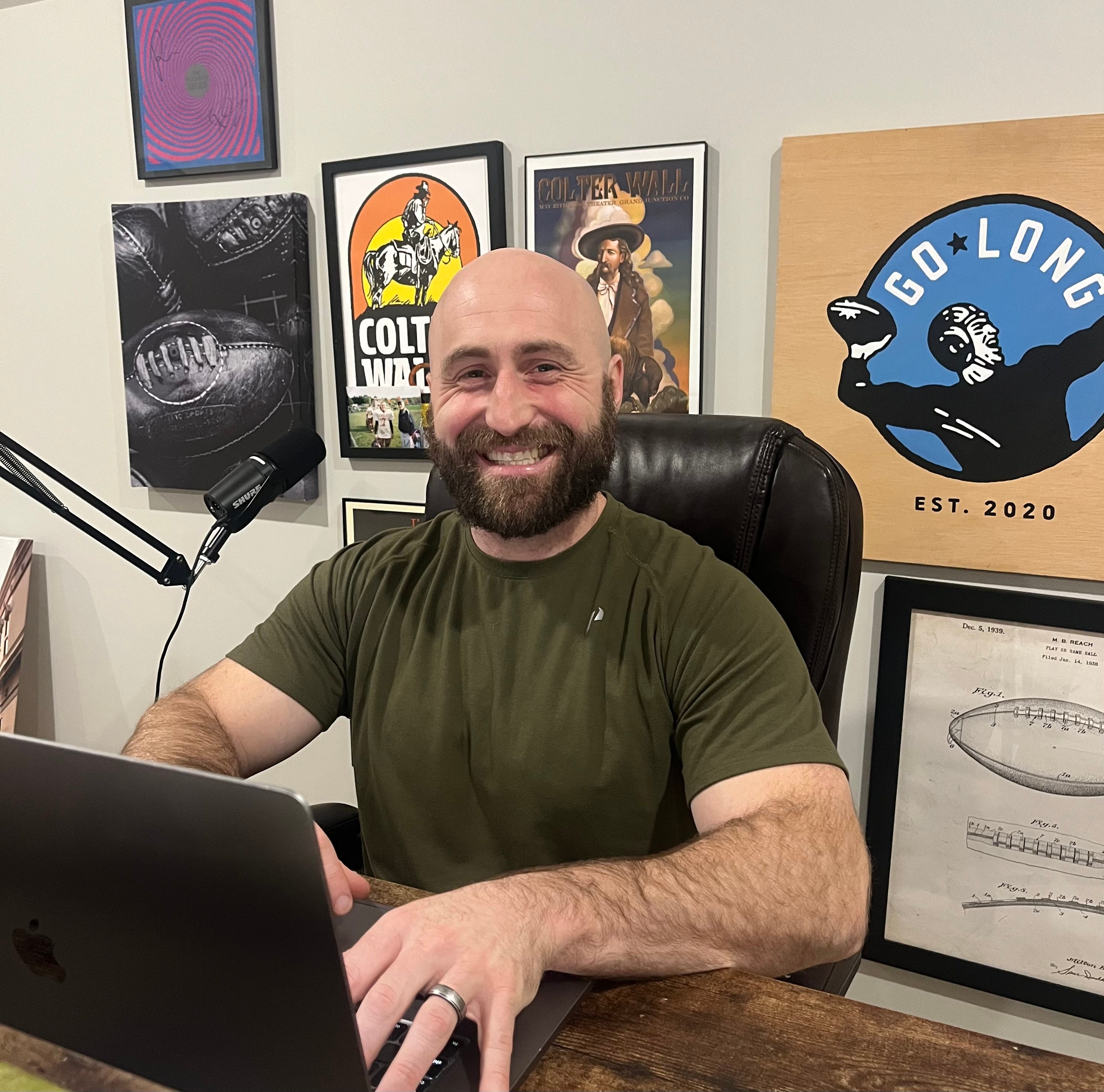
At the time of writing The Blood and Guts most of his working hours were spent running his Substack, Go Long, which required writing weekly 5,000 to 6,000-word feature stories and months-long investigative projects. Tyler also freelanced for the New York Times and hosted a podcast with Bills player Isaiah McKenzie.
All that on top of raising a two-year-old and a newborn who was, in Tyler’s words, “super colicky.”
How did he do it?
He woke up at 3 AM, four to five times a week, for six months. Most of those pre-dawn hours weren’t even spent writing. They were spent transcribing. Tyler interviewed legends of the tight end position: Rob Gronkowski, Tony Gonzalez, Jeremy Shockey, Mike Ditka, Jackie Smith, Ben Coates, Kellen Winslow, and George Kittle. He recorded all these conversations, then transcribed them himself because automated tools like Otter butchered the technical football terminology.
By the time he was done, Tyler had produced 510 pages of transcripts comprising 273,000 words of raw interview material—three to four novels’ worth of content. All separate from writing a single word of the actual book.
Transcription was just the beginning of the process. “I’d print everything out, highlight it, map out themes,” Tyler explained. “I reviewed every conversation three times before I even started writing.”
Tyler didn’t just transcribe from the comfort of his home office. He traveled for these interviews.
He went to South Beach to interview Jeremy Shockey. St. Louis for Jackie Smith. Florida for Mike Ditka. Charlotte for Ben Coates, then drove straight to Jacksonville to work on a Substack feature about Leviska Shenault because he was trying to combine book travel with his regular reporting work to save time.
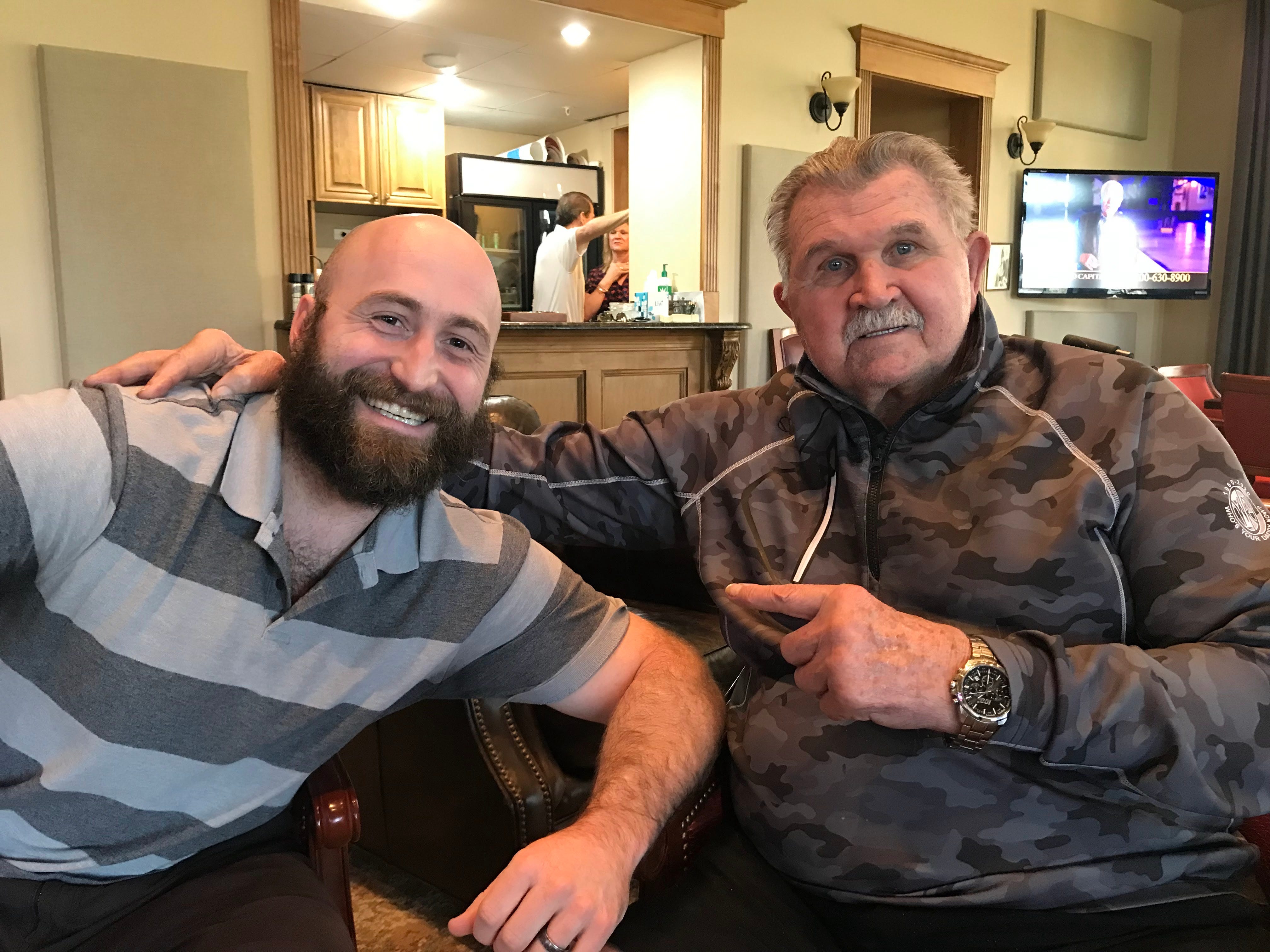
He leveraged existing relationships and cold-contacted players himself. He arranged interviews. He booked travel. He juggled schedules. He did all of this while his wife managed their household, including two children under two years old. (She’s a saint, and Tyler knows it).
And in the middle of all of it—specifically in St. Louis, after interviewing Jackie Smith—Tyler hit a wall.
“I was finishing the Kellen Winslow chapter while managing other phone interviews,” he remembered. “I thought, ‘Can I even do this?’”
He kept going.
I needed to understand: why this book? Why this position? Why commit to something so specific that most people (like me) would assume has a tiny audience?
Tyler’s answer: “I wanted to celebrate the game.” The NFL was becoming consumed with debates about what counts as a catch, what constitutes roughing the passer, the escalating crisis around concussions. The game was getting sanitized, regulated, complicated.
“And I realized the tight end was the one position keeping the integrity of the sport alive,” Tyler explained. “They can still bowl people over in the open field. They can block. They can catch. They preserve the physicality that makes football what it is.”
Tyler wasn’t writing about tight ends because he was chasing a bestseller. He wasn’t writing about the Dallas Cowboys or Tom Brady or some scandal guaranteed to generate headlines.
But what Tyler discovered as he dove into his research made the project even more compelling. Almost every legendary tight end he studied had experienced some kind of young-age trauma that steered them toward the position. The position’s brutal and specific demands‚ blocking 300-pound defensive ends, catching balls in high-pressure traffic, being the smartest person on the field besides the quarterback‚ required a unique collection of traits that their life experiences had forged. The book stopped being about X’s and O’s. It became about people. That’s the book Tyler needed to write. And once he knew that, nothing was going to stop him.
His workspace was Spot Coffee in Hamburg, New York, where the staff got to know him and his project. After Blood and Guts was published, they added it to their modest library. “They got to say, ‘He actually wrote this book here,’” Tyler said.
But the real workspace was his house at 3 AM. Dark. Quiet. Headphones on. While his wife slept after another exhausting day with two kids, Tyler sat alone with the voices of football legends, typing out their stories word by word.
I had to ask. After all that—the 3 AM wake-ups, the sleep deprivation, the colicky baby, the moment of crisis in St. Louis, the 510 pages of transcripts—would Tyler do it again?
His answer came fast: “Yes. Absolutely.”
“It’s funny we’re talking about this,” he said, “because just yesterday I texted my brother-in-law. I said, ‘Man, as hard as it is to write a book, once you do it, you want to do it again.’”
“There’s something about seeing how far you can push yourself,” Tyler explained. “We’re not Olympic athletes training our bodies to the breaking point, but there are other ways to push ourselves. To see how far we can go. To discover what we’re capable of when we commit fully to something as writers.”
And, by the way, the book is great. My favorite chapter (about Rob Gronkowski) starts like this: “Rob is dead!” I recommend it for even the most fair-weather of football fans because Tyler is a great writer and his stories will draw you in.
He was clear-eyed about the book’s potential commercial performance, acknowledging that the topic is “very, very niche.” “The book did okay,” he said. “It wasn’t a bestseller by any means, but you know, the people who read it really loved it and I’ve heard from them and that’s enough.”
I love that. The book touched the people it meant to. A book about tight ends exists in the world because one person believed it should and was willing to wake up at 3 AM to make it happen.
When I think about my novel, I understand it deserves the same commitment. The same belief.
---
Tyler Dunne’s The Blood and Guts: How Tight Ends Save Football is available here. You can find his Substack, Go Long, where he continues to write those deep-dive features about football that make fans see the game differently.
This is the first in my “Make It Anyway” series, where I interview creators who finished meaningful niche projects despite the odds. If Tyler’s story resonates with you—if you’re working on your own creative project and wondering if you can actually finish it—subscribe to Write on Track to see more stories of creators who made it anyway.
For the record, my father-in-law is brilliant.
I loved this too, Noor. I am not a huge football fan, but I want to read this book now thst I know the author’s story. I am glad for your writing.
Noor, what a great story! I absolutely love stories about people following their passions like this, however niche. I couldn't hit "subscribe" fast enough!!!